
No products in the cart.
How to Choose Heating Equipment for Lab
Heating is a basic part of many laboratory experiments. Whether you are dissolving chemicals, running reactions, or drying samples, the right heat source makes a big difference. Good lab heating equipment helps maintain accuracy, improves safety, and saves time during experiments.
Different laboratories have different needs. Educational labs need simple tools, while research and pharmaceutical labs need more precise and controlled systems. That is why choosing the right laboratory heating equipment is important.
From hot plates and burners to mantles and furnaces, each option serves a specific purpose. This article will help you understand how to choose the right heating equipment based on your laboratory requirements.
Types of Heating Equipment in the Laboratory
There are several types of heating apparatus in the laboratory, each designed for different applications. The different types of heating equipment are:
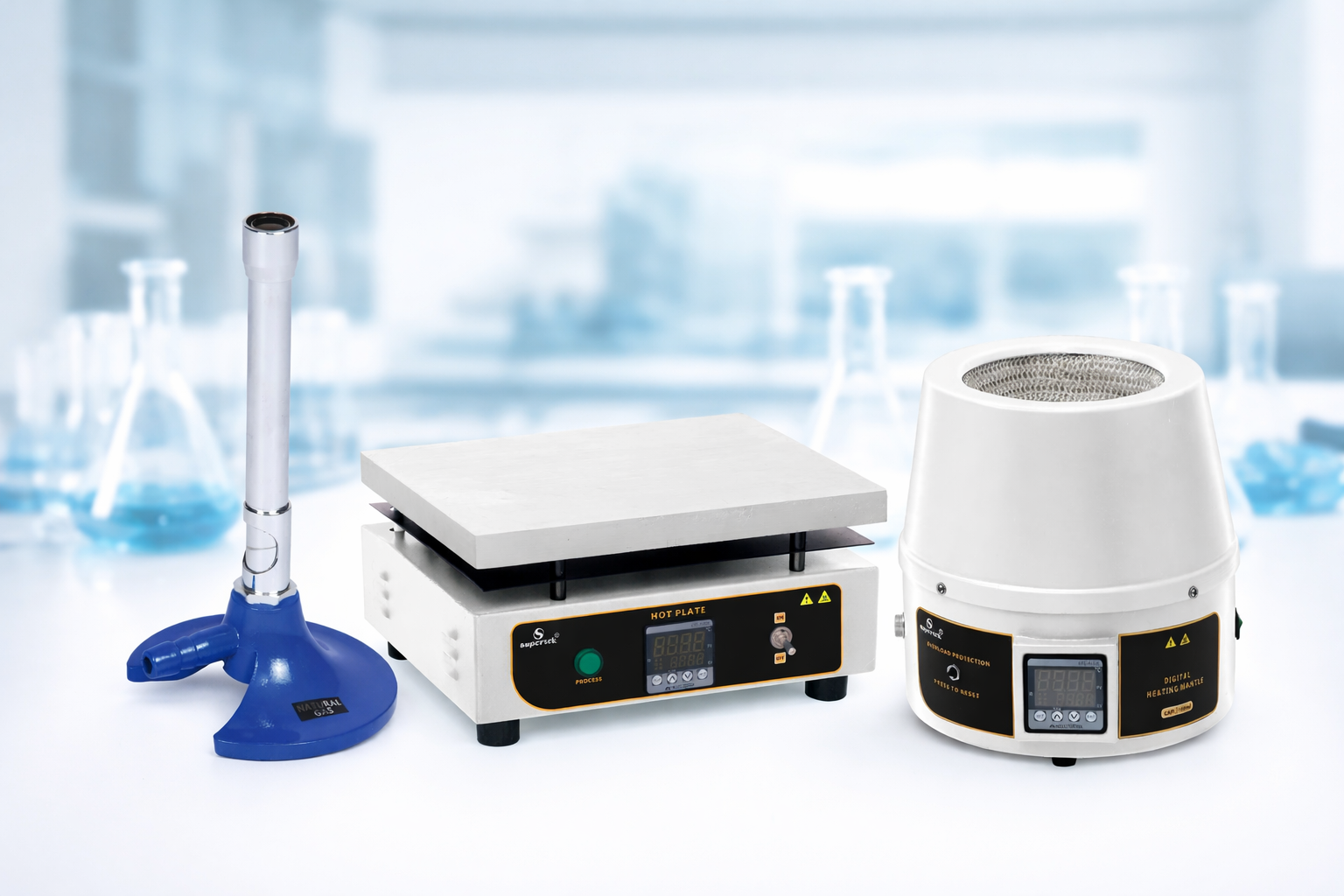
- Hot plates: They are commonly used for general heating. These hot plates used in laboratory settings provide a flat surface and are suitable for beakers and flasks. A laboratory heating plate offers controlled heating and is widely used in routine experiments.
- Heating mantles: They are designed for round-bottom flasks. A heating mantle for laboratory use provides uniform heat distribution, making it ideal for chemical reactions.
- Bunsen burners: They are traditional flame-based tools used for direct heating. They are simple and effective but require careful handling.
- Spirit lamps: They are used in basic setups where low heat is sufficient. Muffle furnaces, on the other hand, are used for very high-temperature applications such as material testing.
The choice of laboratory apparatus for heating will depend on the type of experiment and the level of temperature control needed.
Key Factors to Consider When Choosing Laboratory Heating Equipment
Selecting the right lab heating equipment requires careful evaluation of your needs. Here are some key points to consider:
- Nature of experiment: Chemical, biological, or industrial experiments require different heating methods. Some reactions need precise control, and some need direct heat.
- Temperature range: Always check the maximum temperature required. Some laboratory heating equipment is designed for low heat, while others can handle very high temperatures.
- Type of material: The material being heated also affects your choice. Sensitive compounds can require gentle heating using electric devices.
- Sample volume: Larger volumes need more powerful systems, while small samples can be handled with compact devices.
- Accuracy and control: For precise experiments, choose equipment that provides temperature control and stability.
- Power source: Decide between electric and flame-based options depending on safety, availability, and lab conditions.
Keeping in mind these factors will help you choose the most suitable lab equipment used for heating in your laboratory.
Hot Plate vs Heating Mantle: Which One to Choose?
Choosing between a hot plate and a heating mantle depends on your application. A hot plate used in a chemistry lab is simple and easy to operate. It provides a flat surface and is suitable for heating beakers, flasks, and containers. It is ideal for general-purpose heating and routine laboratory tasks. Many labs prefer a heating plate laboratory setup for its convenience.
On the other hand, a heating mantle is designed specifically for round-bottom flasks. It provides uniform heating and reduces the risk of overheating or uneven temperature distribution.
Both are important forms of laboratory apparatus for heating, but if your work involves precise chemical reactions, a mantle is a better choice. For general heating, hot plates are more practical.
Role of Bunsen Burner and Traditional Heating Methods
The Bunsen burner remains a classic tool in laboratories. It is widely used for direct flame heating and quick temperature adjustments. In many educational labs, the heating apparatus in chemistry laboratory setups still includes burners for demonstration purposes.
However, flame-based heating has limitations. It offers less control compared to electric devices and can be risky when working with flammable substances. Modern labs often prefer electric systems for better safety and precision.
Still, traditional burners are useful in certain situations where quick and high heat is required. They remain an important part of the lab apparatus used for heating.
Safety Considerations for Lab Heating Equipment
Safety should always be a priority when working with heating devices. Proper use of laboratory heating devices helps prevent accidents and leads to smooth operations. Keep in mind the following:
- Avoid overheating and sudden temperature changes, as they can damage glassware.
- Always use equipment in well-ventilated spaces, especially when working with chemicals that release fumes.
- When handling flammable substances, avoid open flames and use electric heating instead.
- Always wear safety equipment such as gloves and protective goggles while working.
- Regular inspection and maintenance are also important. Faulty equipment can lead to serious hazards.
Following proper safety practices ensures safe use of scientific heating equipment in any laboratory.
Choosing Heating Equipment for Different Lab Applications
Different laboratories require different types of heating solutions. The choice of heating equipment for a chemistry lab depends on the level of work being carried out.
Educational laboratories usually prefer simple and safe devices such as hot plates and spirit lamps. Research laboratories require precise temperature control, so they often use advanced electric systems.
Pharmaceutical laboratories need highly accurate and reliable heating devices to meet strict standards. Industrial labs, on the other hand, may require large-scale systems capable of handling bigger volumes.
Understanding the purpose of your lab will help you choose the right heating equipment for research labs and other applications.
Energy Efficiency and Cost Considerations
When selecting heating devices, cost and efficiency should also be considered. Electric systems are widely used as electric heating devices in lab environments because they provide better control and safety.
Although electric equipment can have a higher initial cost, it is often more energy-efficient in the long run. Durable and well-designed systems also reduce maintenance costs.
Investing in high-quality heating equipment provides long-term reliability and consistency, making it a cost-effective choice over time.
Conclusion
Choosing the right heating equipment is important for any laboratory. The correct tools improve accuracy, ensure safety, and make experiments more efficient. Since different experiments require different heating methods, it is important to understand your needs before selecting equipment.
A well-equipped lab often uses a combination of devices, including hot plates, mantles, and burners. By selecting reliable and good-quality lab equipment, laboratories can achieve better results and safer environments. For consistent performance and durability, always choose trusted suppliers like Supertek for your laboratory needs.